
Difference Between a Content Creator & Content Curator
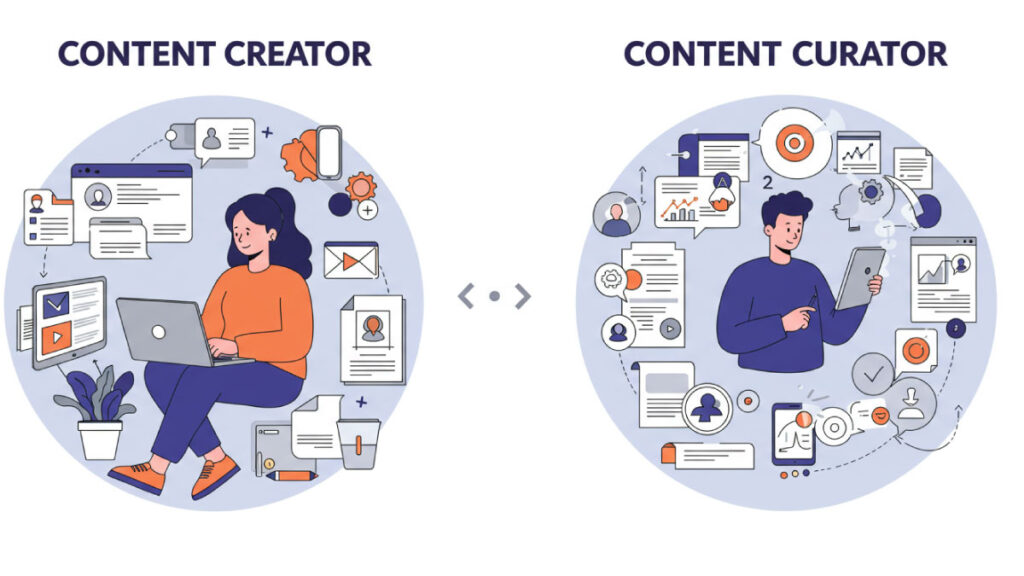
Imagine spending hours creating social media posts only to see little engagement, while another brand grows rapidly by sharing the right mix of original and curated content. Understanding the difference between a Content Creator & Curator has become more important than ever as businesses compete for attention online. Research from the Content Marketing Institute shows that successful content marketing relies on consistently delivering valuable and relevant content that attracts and retains a clearly defined audience. Yet many businesses struggle because they don’t know when to create fresh content or when to curate existing insights to add value. As a result, they waste time, miss opportunities, and fail to build lasting relationships with their audience. Many brands assume that creating more content automatically leads to better results. Reality often proves otherwise. Marketing budgets become stretched, content teams experience burnout, and social media pages lose consistency when there is no clear content strategy. Valuable industry insights are sometimes ignored, while original ideas fail to reach the right audience because businesses don’t understand the unique roles of a Content Creator & Curator. This confusion can weaken brand authority, reduce engagement, and slow business growth. Socialander believes that great content is not just about creating more, it’s about creating smarter. This guide explains the key differences between a Content Creator & Curator, when each approach works best, and how combining both can strengthen your marketing strategy. Whether you’re building a personal brand, managing a business, or growing your online presence, Socialander will help you develop a content strategy that attracts, engages, and converts your ideal audience. Who Does What? Content creation refers to generating original content for your website, blog, or social media channels. This content is unique to your brand. Content curation involves collecting and sharing relevant content from external sources that align with your brand’s messaging. While many assume they are the same, they serve different purposes in a marketing strategy. Content creation helps build brand authority, while content curation saves time and offers diverse perspectives. Pros & Cons of Content Creation Benefits: Drawbacks: Pros & Cons of Content Curation Benefits: Drawbacks: What’s the Best Approach? Many businesses find success with a 60/40 mix which is 60% original content and 40% curated content. However, the right balance depends on your audience’s preferences. Key Differences at a Glance FEATURE CONTENT CREATION CONTENT CURATION Definition Creating original content Collecting and sharing content from external sources Ownership Fully owned by the brand Not owned by the brand SEO Benefits Boosts rankings and traffic Indirectly Supports SEO Time Required High Lower Customization Fully customizable Limited customization How to Balance Content Creation and Curation for Maximum Impact To get the best results, businesses should use a mix of content creation and curation. The 60/40 rule suggests that 60% of your content should be original, while 40% should be curated. However, the ideal ratio depends on your brand, industry, and audience preferences. How to Find the Right Balance: Many successful brands use both strategies. They create in-depth blog posts while sharing insights from other industry leaders, establishing credibility while maintaining an active presence. Best Practices for Content Creation Creating high-quality content is essential for engaging your audience and boosting your brand’s credibility. Here’s how to ensure your content stands out: 1. Prioritize Quality Over Quantity Instead of publishing daily low-quality posts, focus on well-researched and valuable content that resonates with your audience. 2. Make Content Visually Appealing Use images, infographics, and videos to break up text-heavy content and improve engagement. 3. Optimize for SEO 4. Include a Clear Call to Action (CTA) Your content should always guide the reader toward the next step, whether it’s subscribing, booking a call, or making a purchase. 5. Stay Consistent A strong content strategy ensures your brand stays top-of-mind. Use a content calendar to schedule regular posts without overwhelming your team. Best Practices for Content Curation Content curation is more than just sharing links, it’s about adding value to your audience. Here’s how to curate effectively: 1. Choose High-Quality Sources Always share content from reputable websites, thought leaders, and industry experts to maintain credibility. 2. Personalize and Add Insights Instead of just reposting, add your own perspective or a summary to make it more engaging for your audience. 3. Diversify Your Curation Strategy 4. Give Credit Where It’s Due Always attribute sources properly to avoid plagiarism or copyright issues. 5. Avoid Over-Curation While curation saves time, relying too much on external content can make your brand seem like an aggregator rather than a thought leader. How Content Creation and Curation Impact Brand Authority Your content strategy directly affects how your audience perceives your brand. A well-balanced approach can position you as a trusted industry leader. Effects of Content Creation: Effects of Content Curation: To establish authority, focus on 80% educational or value-driven content and 20% promotional content. This balance prevents your brand from appearing too self-focused while still promoting your offerings. Tools to Help with Content Creation and Curation To streamline your workflow, here are top tools that simplify content marketing: Best Content Creation Tools: Best Content Curation Tools: Use scheduling tools like Hootsuite, Buffer, or Sprout Social to plan, publish, and monitor your content across multiple platforms. Common Mistakes in Content Marketing and How to Avoid Them Content marketing is a powerful tool, but many businesses make mistakes that hinder their success. Here are some common pitfalls and how to avoid them. 1. Lack of a Clear Strategy Mistake: Posting content randomly without a defined strategy leads to inconsistent messaging and poor results. Solution: Develop a content marketing plan with clear goals, target audience insights, and key performance indicators (KPIs). 2. Ignoring Audience Needs Mistake: Creating content that doesn’t resonate with your target audience reduces engagement. Solution: Conduct audience research, analyze feedback, and create content that addresses their pain points and interests. 3. Poor Quality Content Mistake: Low-quality, unedited, or duplicated content damages credibility and SEO rankings. Solution: Invest in high-quality writing, editing, and visuals. Use tools like Grammarly and